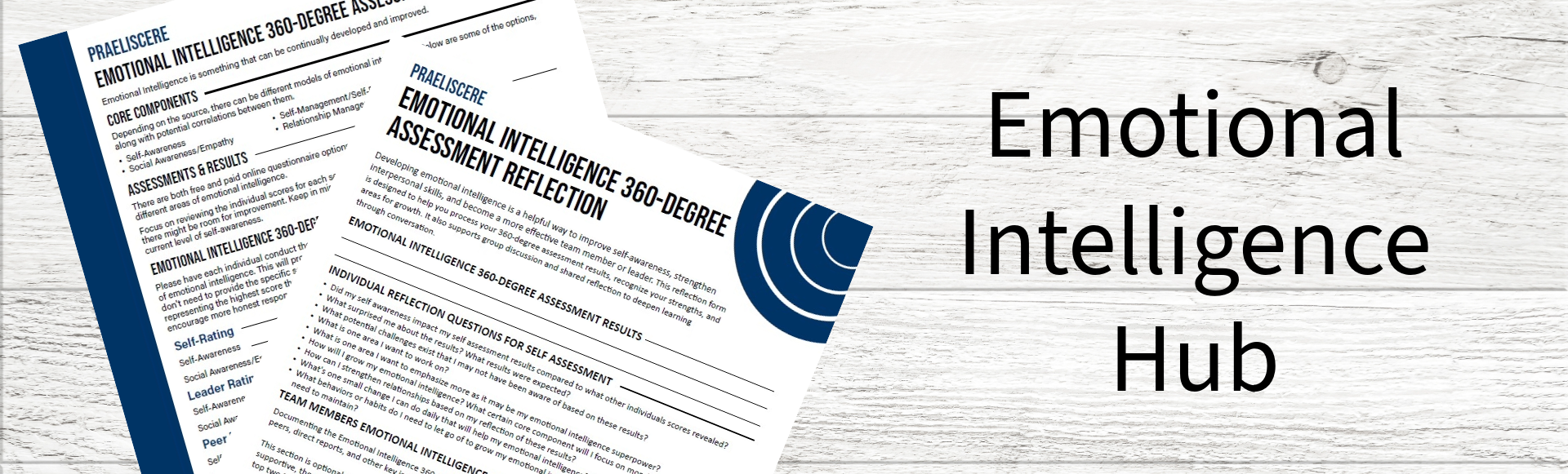
Emotional intelligence is a skill. This skill can be developed.
Why Emotional Intelligence Matters
With intentional practice and reflection, anyone can strengthen their ability to regulate emotions, respond with empathy, and engage more meaningfully with others. Emotional intelligence influences how we communicate, build relationships, handle conflict, and adapt to change in the workplace. As we grow with our emotional intelligence, we can thrive in all of these areas.
Below, you’ll find a detailed breakdown of the Emotional Intelligence Hub, including:
- Core Components of Emotional Intelligence
- Assessments and Results
- Emotional Intelligence 360-Degree Assessment
- Emotional Intelligence 360-Degree Assessment Reflection
- Emotional Intelligence Training
- Post Training Feedback
- Ongoing Application and Reinforcement
Core Components
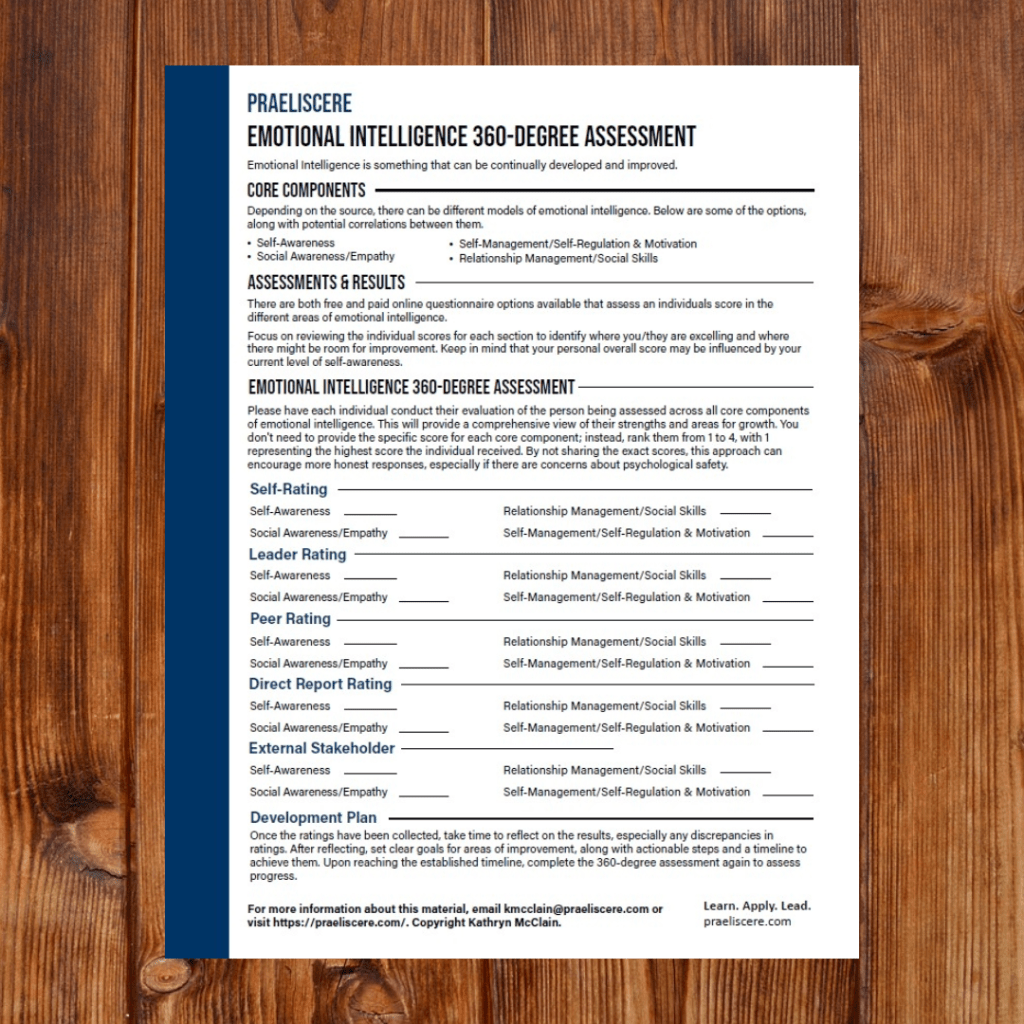
Depending on the source, there can be different models of emotional intelligence. Below are some of the options, along with potential correlations between them.
- Self-Awareness
- Self-Management/Self-Regulation & Motivation
- Social Awareness/Empathy
- Relationship Management/Social Skills
Assessment & Results
There are both free and paid online questionnaire options available that allow you to assess your scores in different areas of emotional intelligence.
Focus on reviewing the individual scores for each section to identify where excelling and where there might be room for improvement. Keep in mind that your overall score may be influenced by your current level of self-awareness.
Emotional Intelligence 360-Degree Assessment
A 360-Degree Assessment provides a well-rounded view of an individual’s emotional intelligence by gathering feedback from multiple perspectives, not just their own. In addition to self-evaluation, this process typically includes input from a leader or supervisor, peers, direct reports, and even external stakeholders.
Each participant rates the individual across the core components of emotional intelligence offering a more comprehensive picture of both strengths and areas for development.
Rather than requiring specific numerical scores, we recommend ranking the components from 1 to 4, with 1 representing the area where the individual received the highest feedback overall. This simplified method helps reduce pressure on raters, promote honest responses, and increase psychological safety, especially in team or workplace settings.
Emotional Intelligence 360-Degree Assessment Reflection
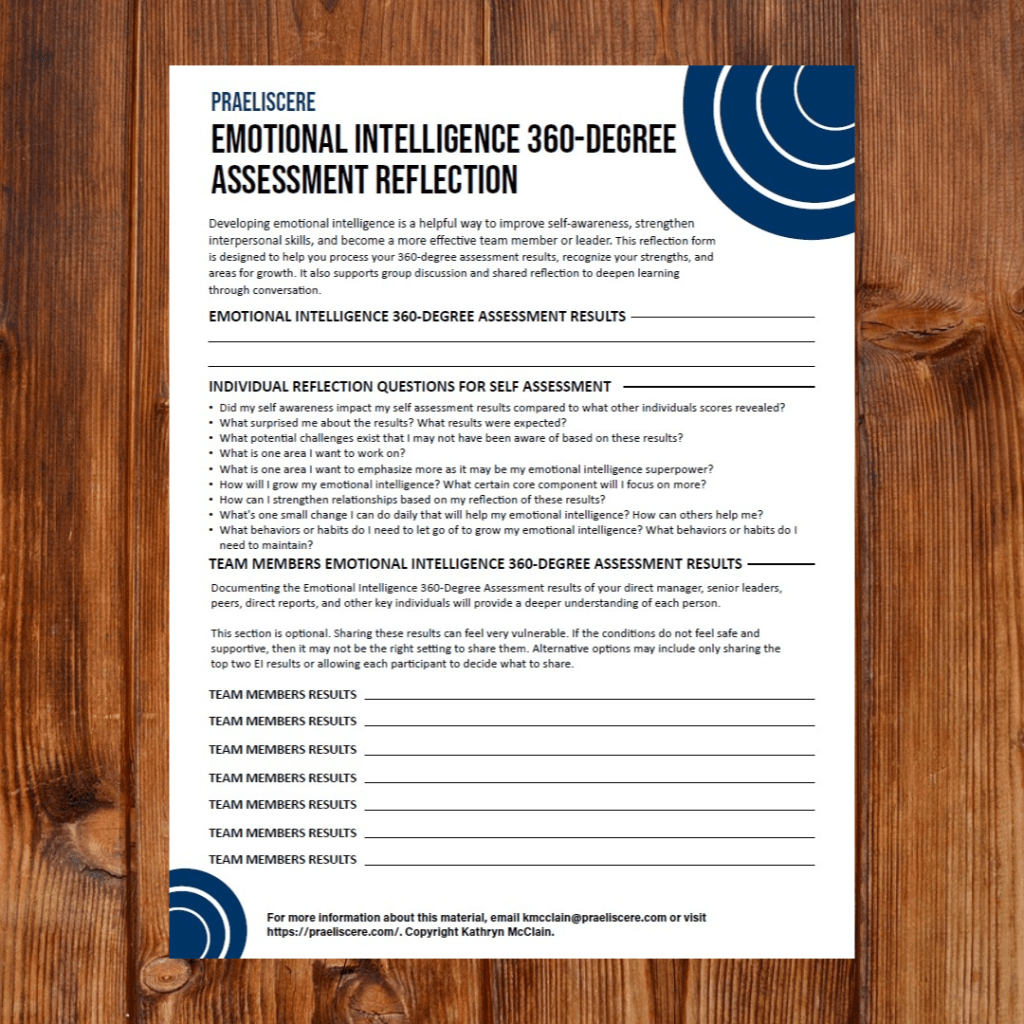
The Assessment Reflection is a perfect resource to follow-up to the 360-Degree Assessment. The assessment reflection dedicates time for self reflection, group discussion, and post group discussion reflection, enabling further exploration of results and application.
Emotional Intelligence Training
Partner the 360-Degree Assessment and Assessment Reflection with our complimentary Emotional Intelligence Training Slide Deck. This training builds essential skills in Emotional Intelligence. Perfect for team development, workshops, and professional growth sessions.
Conducting pre and post assessments for trainings are helpful data points to see the impact these trainings are having on participants. These assessments can provide insights into training adjustments for the future.
Post Training Feedback
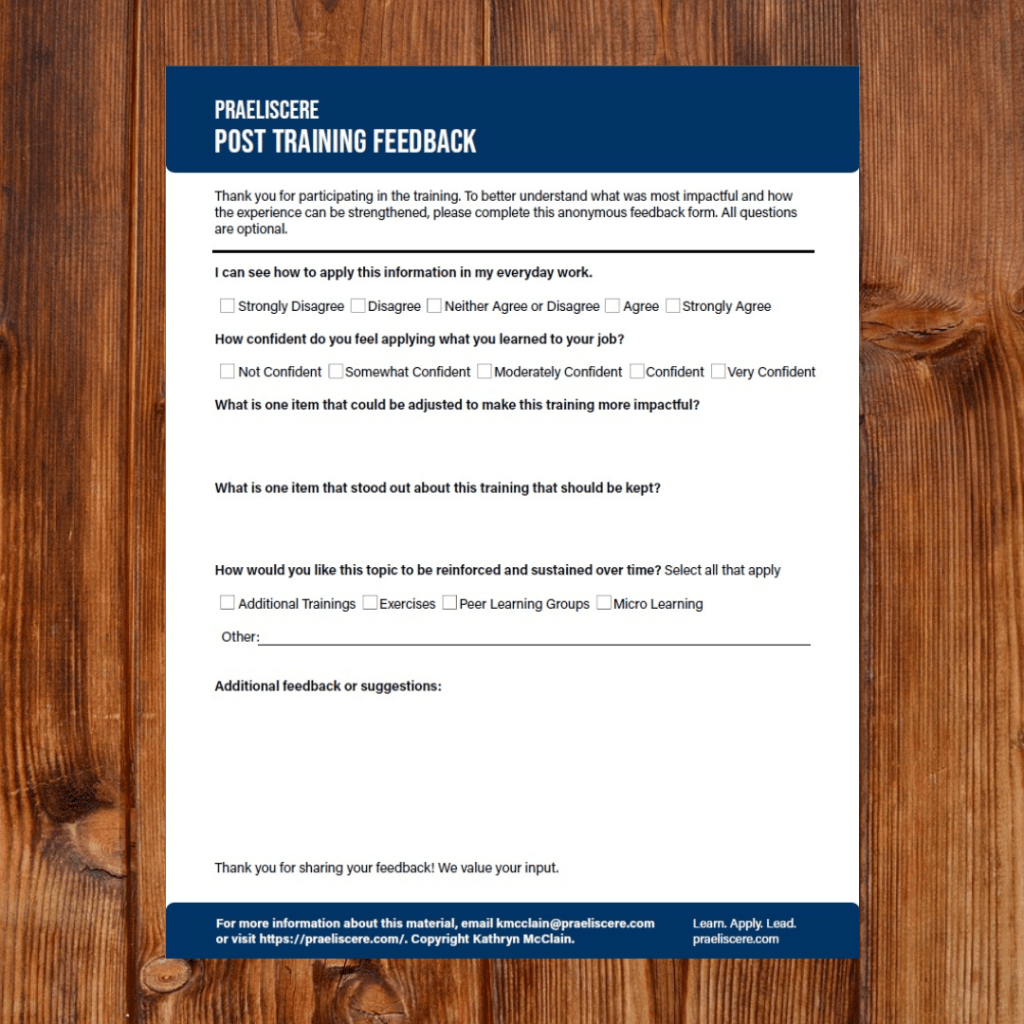
When a training takes place, a post training feedback form is used to better understand where impact occurred and where improvements can be made. This feedback is then turned into actionable steps to refine and strengthen future trainings. Anonymous responses are encouraged, as they support more honest and transparent feedback.
Ongoing Application and Reinforcement
After a training, exercise, or assessment is completed, ongoing application and reinforcement become the focus. Learning is sustained through follow-up trainings, exercises, and/or micro-learning opportunities, as well as by integrating the topic into goals, performance conversations, recognition efforts, and peer learning groups.
When recognition, performance conversations, goals, and coaching takes place, intentionally connecting feedback back to the learnings helps further embed and reinforce them. As individuals build knowledge, experience, and confidence, they are empowered to lead, share insights, and support others in applying the learning as well.
This approach reflects the meaning of Praeliscere with Learn, Apply, Lead.
High Impact, Complimentary Products
Emotional Intelligence 360-Degree Assessment
Emotional Intelligence Training PowerPoint
Emotional Intelligence 360-Degree Assessment Reflection
Post Training Feedback Form
Learn. Apply. Lead.
Practical Insights Delivered. Get access to new tools, reflections, and workplace-ready resources as they’re released monthly.
Stay in the loop with our latest insights, resources, and updates by connecting with us on LinkedIn and Facebook. It’s a great way to engage with our work and join the conversation.
 Praeliscere